Change Language :
Container terminal
Shore power supply for container terminals
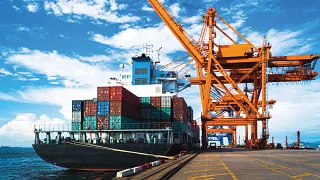
Huge cargo ships dock at a container terminal to load and unload standardised containers with the help of enormous gantry cranes. Lorries and automated vehicles transport the containers to designated storage areas where they are stacked and sorted for onward distribution. Sophisticated logistics systems track every movement to ensure efficiency and accuracy in the global movement of goods. Terminal operations run around the clock, coordinating ships, lorries and trains to maintain the global flow of goods along supply chains.
Therefore, careful planning is essential when integrating a shore power system to ensure maximum flexibility, reliability and safety. At the same time, it must be ensured that the system is structurally feasible, does not interrupt work processes and integrates seamlessly into the core business of container logistics.
On this page you will find detailed information on:
Mobile power socket supplies container ships at the Port of Hamburg
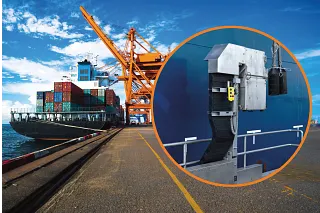
The iMSPO (igus Mobile Shore Power Outlet) is a mobile "power outlet" that runs along the quay on a travel of up to 400 metres, providing shore power directly to the docked ship. The Port of Hamburg uses three of these systems at the CTH.
At the Container Terminal Hamburg (CTH), the port relies on a pioneering solution from igus: the Mobile Shore Power Outlet (iMSPO). Three movable systems with integrated rol e-chains supply container ships with power along 300, 150 and 110 metres of quay length with pinpoint accuracy - regardless of their berthing position.
The iMSPO systems move on a specially developed steel structure above the flood wall. This ensures maximum safety, saves space and enables a quick connection in under 15 minutes - with just two people. The robust energy chain reliably guides the heavy cables and protects them from wear.
The result: Fewer emissions, lower operating costs and more flexibility for port operations - honoured with the title "Port Innovation of the Year".
Challenges of implementation at container terminals
Shore power requirements for container terminals in accordance with IEC 80005-1 standards
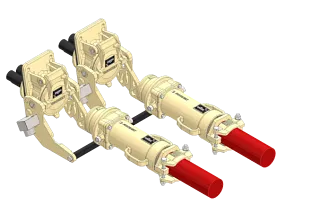
The IEEE/IEC/ISO 80005-1 standards for high voltage shore connections contain comprehensive information on the design, installation and testing of HVSC (High Voltage Shore Connection) systems. They provide general guidelines for HVSC systems as well as specific appendices for certain ship types. Appendix D is particularly relevant for container ships. This section contains specifications that ensure the global interoperability and safety of the systems through defined test parameters.
Some of the most important design features for container terminals and ships are:
- The cable management system must be located on board the ship.
- The nominal voltage of the system must be 6.6kV.
- For HVSC systems with a maximum power consumption of 7.5MVA, two parallel cables with three pilot conductors each must be used.
- The connector configuration includes 3x main phase, 1x PE, 3x pilot pins.
Best practices for successful planning, designing and implementation
Planning should be geared towards achieving 100% connectivity under today's conditions while ensuring the flexibility to adapt to future requirements at any time.
System planning must take into account not only current needs, but also potential future requirements and emergency situations that may arise due to the failure of other devices at the terminal. The best system is one that fulfils current requirements, takes future developments into account and can react to unplanned events - without additional planning effort.
The international standard IEC 80005-1 should be carefully considered to ensure interoperability with other systems and safety when dealing with high voltage technology.
- Interoperability: As the terminal receives ships from all over the world, it is crucial to ensure that these ships can be easily connected when they arrive.
- Safety: With high voltage shore power systems, it is essential to design a system that takes into account occupational safety from both an electrical and ergonomic perspective.
Core business operations should be carefully analysed to ensure that the shore power system is seamlessly integrated into the existing operational structure - with fast, easy and safe operation.
System planning must ensure that the shore power system works harmoniously with existing operations. The connection process should not affect the efficiency of operations. A system that requires a lot of labour or is complicated to operate and maintain can have a negative impact on profitability.
Our solutions
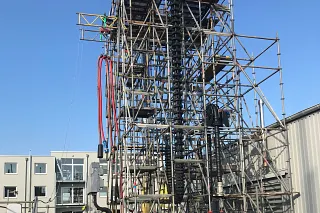
igus® Mobile Shore Power Outlet
With a modular and flexible product range, we can develop a solution that suits your terminal and fits seamlessly into your workflow.
- iMSPO® assembled on the quay wall
- iMSPO® on a customised steel structure
- iMSPO® in a trench in the terminal
- Special solution – e-chain reel
More about our igus Shore Power solutions


Contact us
Contact details

Opening hours
Office hours
Monday to Friday from 8 am - 8 pm.
Live chat:
24h