Change Language :
Energy Supply Systems For Shore Power Supply
Sustainable energy supply systems at ports for ships
What is shore power?
Shore power, also known as cold ironing, is an environmentally friendly solution for supplying ships in port with power without having to rely on their diesel-powered generators. This reduces emissions and noise and allows ships to keep their main engines switched off while still receiving power for lighting, air conditioning and other systems. We at igus help simplify shore power supply and enable efficient and practical connection of ships to the power grid, regardless of where they are berthed in the port.
Many people may already be familiar with shore power, but under a different name. For this reason, here are some of the most common synonyms for shore power:
- Shore power
- Cold ironing
- External power supply
- Shore-side electricity
- Land connection
- Alternative Maritime Power (AMP)
- Onshore Power Supply (OPS)
- Cold ironing
In order to gain a better insight into the topic of shore power, it is helpful to know and familiarise yourself with some key terms:
- Shore power: The supply of ships with electrical energy from land to avoid the operation of on-board generators.
- Cold ironing: The process of switching off a ship's main propulsion engines and generators while docked and switching to shore power.
- Shore connection: The technical equipment that enables a ship to be connected to the shore-side power grid.
- Port power supply: The provision of electrical energy for ships by the port operator or local energy suppliers.
- Emission control: Measures to reduce air pollutants from ships in the port through the use of shore power.
- Environmental regulations: Statutory provisions that encourage or require the use of shore power to reduce environmental impact.
- Energy efficiency: The optimised use of energy achieved through the use of shore power, resulting in cost savings.
- Sustainability: Using shore power as part of an environmentally friendly approach to minimise environmental load and support a sustainable future.
The challenge: the connection dilemma
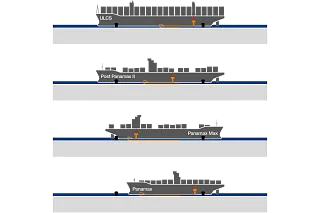
Every port is unique. Tidal behaviour, terminal designs and equipment differ from one port to another. Ships equipped for shore power supply have a cable drum on board that allows two cables with connectors to be lowered onto the quay. These can then be connected to sockets on the quay. There are three conditions for finding the optimum location for a fixed socket:
1. Difference between ships' shore power locations
2. Onboard CMS constraints
3. Berth arrangement flexibility
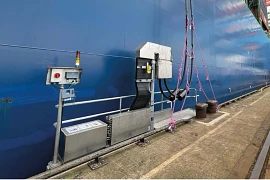
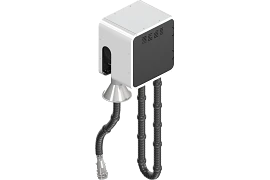
The self-propelled iMSPO system from igus offers the solution. It is able to provide a shore-side power outlet for the ship's cables wherever they are needed along the berth at a distance of 400m and more.
The environmental benefits of igus shore power: A step towards sustainable ports
The maritime industry is at a turning point when it comes to reducing its environmental impact and promoting more sustainable practices. One key technology helping to drive this transformation is the igus shore power solution. At igus, we are at the forefront of developing innovative systems that enable ships to switch to clean energy sources when docked. Our systems include the following:
One of the biggest advantages of shore power is the drastic reduction in harmful emissions. Ships that switch to shore power when docked in port can switch off their diesel generators, which leads to a significant reduction in nitrogen oxides, sulphur oxides, particulate matter and carbon dioxide. These emission reductions are not only good for the planet, but also for the health of people who live near ports.
With fewer ship emissions, air quality improves in and around port areas. This is particularly important for cities where the port is an integral part of urban life. Cleaner air means fewer respiratory illnesses and a higher quality of life for local residents and port workers.
Shore power also contributes to a quieter environment, as the ship's engines and generators can be switched off. This reduction in noise is not only pleasant for the ears, but also promotes a stress-free environment.
Shore power is often more efficient than power generation on board ships. When this power comes from renewable sources, efficiency is increased even further, leading to an even greater reduction in the carbon footprint.
By using shore power, ships can reduce their consumption of fossil fuels. This not only helps reduce pollution but also lowers operating costs for shipping companies.
igus shore power systems are an essential component of green port initiatives that aim to minimise the environmental impact of shipping traffic. They demonstrate the commitment of port authorities and shipping companies to make the maritime industry more environmentally friendly.
The implementation of igus shore power systems is a clear sign that the maritime industry is ready to invest in sustainable technologies. This not only promotes environmental compatibility but also strengthens the industry's image as responsible and future-oriented.
Browse energy supply systems for shore power supply


readychain® in shore power connections
Use of a customised energy chain: e-spool®
Ships are to be supplied with shore power in the harbour in order to be able to switch off the auxiliary diesel generators on board and thus protect the environment. To do this, the ships must be connected to a cable supply system via a standardised plug connection.
A reliable, robust and flexible shore power supply system from igus® is used at the highly frequented Mongstad offshore base in Norway.
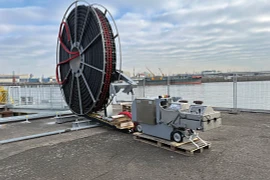
A pre-assembled e-spool® is integrated into a three metre long container that can be handled by the forklift to position the system along the various berths.
In addition, the container protects the system from the harsh environment and the effects of harbour operations. The readychain® system is a slip-ring free solution. All cables are hard-wired, which in turn reduces maintenance costs.
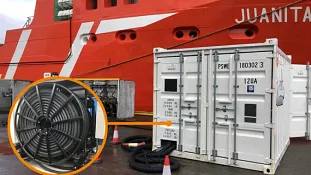
e-spool shore power
Shore power cable drum without slip ring
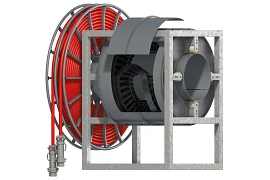
e-spool shore power is a slip ring-free cable drum, e.g. for supplying shore power to container ships. A patented rotary module replaces the slip ring and reduces maintenance and susceptibility to faults. The system significantly increases operational safety and ensures a reliable energy supply.
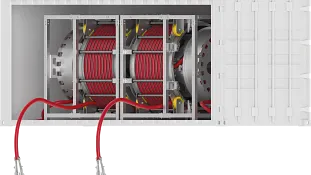

Tech up
- Rotary module instead of slip ring susceptible to corrosion ensures high operational reliability in a maritime environment

Cost down
- Particularly low-maintenance and easy-to-maintain system

Proof
- Tested in the igus laboratory

Sustainability
- Contact points and sliding contacts no longer require replacement/maintenance
How to install a safe shore power supply
Requirements and standards for connecting to shore power
Various requirements and standards must be met in order to install shore power both in a port and on board ships. Both the port and the ships themselves are affected.
Shore power supply applications and success stories with igus®
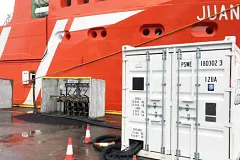


Connection solutions - offshore and LNG terminals
Economic benefits of shore power
At a time when sustainability and environmental protection are becoming increasingly important, the use of shore power offers considerable economic benefits for port operators and shipping companies. From 2030 onwards, every port in Europe must have a shore power supply system. Act early with igus rather than too late. The following points are a plus for every port and can be achieved with solutions from igus:


EU-wide obligation from 2030
As of 2030, the use of shore power will be compulsory throughout the EU for container and cruise ships with a gross tonnage of over 5,000. From this point on, any combustion processes at the quayside will also be prohibited. Port of Hamburg | Shore power for ships)
Questions and answers about our shore power innovation
igus® is characterised by the provision of innovative, durable and flexible solutions. The igus® iMSPO can be moved along the quay, which improves connection options for ships. We also rely on our high-quality chainflex® cables and e-chain® energy chains, which are known for their durability and reliability.
Installation time can vary depending on the complexity of the project and the specific requirements of the port. With all the necessary permits and preparations, installation can typically be completed within a few weeks.
Contact us for a detailed assessment tailored to your needs.
The costs for an igus® Mobile Shore Power Outlet (iMSPO) depend on the specific requirements of the respective port and the length of the quay. For an exact price quotation, we recommend contacting us directly to receive a customised solution.
Ports that do not comply with the EU emission reduction regulations by 2030 could face penalties and trade restrictions. This can have a negative impact on the profitability and growth of the regions concerned.
The power we provide can be compared with that of the original diesel engines, but with the advantage of a significant reduction in emissions.
We have already worked with various ports worldwide to implement shore power solutions. Examples include the Port of Hamburg, which is expanding its shore power infrastructure, and a floating LNG storage terminal in Bahrain, which is equipped with an igus® solution.
Connection solutions - offshore and LNG terminals
Offshore terminals and ships place high demands on the flexibility and reliability of energy chain solutions, especially in combination with extreme weather conditions and changing berthing positions. LNG terminals require robust and low-maintenance shore power solutions that can cope with the challenges of long distances, harsh environmental conditions and constant operational readiness, for which the OSC energy supply system is ideal. Both areas need systems that can compensate for movements due to tides, wind and waves and implement emergency mechanisms. Such a system can also be found in our user report on the FSU in Bahrain.
Real-world examples of shore power supply


Services


Recommended for you


Contact us
Contact details

Opening hours
Office hours
Monday to Friday from 8 am - 8 pm.
Live chat:
24h